What Universities Should Look for in a Charter Bus Vendor: A Procurement Guide
When a team bus breaks down on the way to a conference game, or a vendor’s insurance certificate was never checked, the problem lands on someone’s desk in athletics, risk management or purchasing. That makes choosing a charter bus vendor for universities a risk decision as much as a purchasing one.
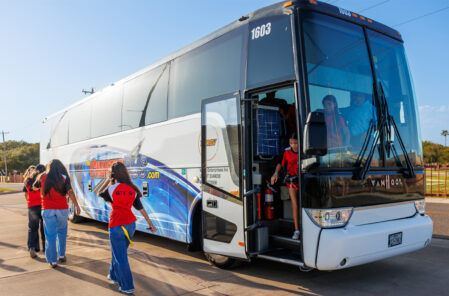
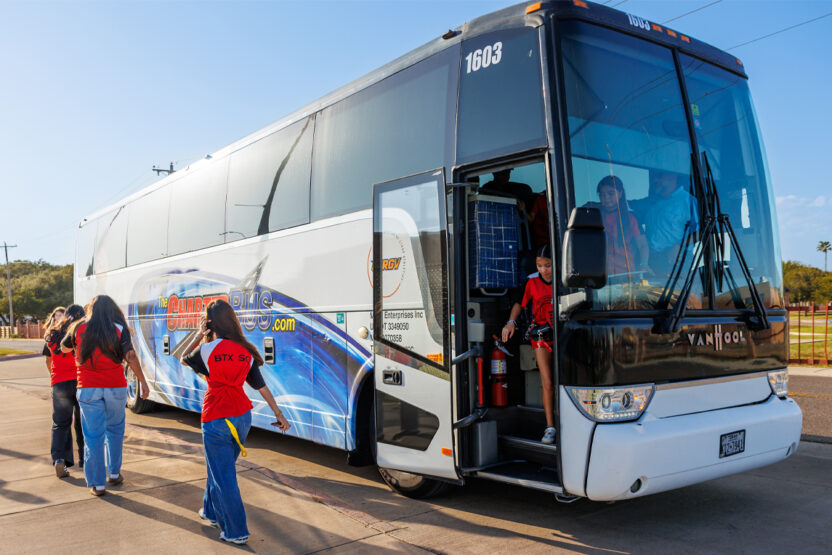
Universities need a transportation partner that understands the demands of campus travel, athletic schedules, and group transportation. The Charter Bus provides charter bus services for groups traveling to university events, athletic competitions, and other organized trips.
Most of the checking comes down to public federal records, an insurance certificate and a few direct questions. In short, a qualified vendor should be able to show:
- A USDOT number and active operating authority you can look up with the federal government
- A Satisfactory safety rating, or clear written answers if it has no rating
- Insurance that meets both the federal minimum and your university’s own limits
- Qualified drivers and trip plans that stay within federal hours-of-service limits
- A contract on your terms, a line-by-line quote and a real backup plan
Here’s how to check each one before you buy, and what to ask once the purchase order is signed.
Charter Bus Procurement Starts With Federal Records

Start with the federal record, which any buyer can look up. According to the Federal Motor Carrier Safety Administration (FMCSA), an interstate, for-hire motorcoach company generally must have both a USDOT number and operating authority registration. Ask each vendor for its USDOT number up front, then check the company yourself with FMCSA’s Look Before You Book bus safety search, which walks you through operating authority, safety records, licensing and insurance.
FMCSA assigns three safety ratings: Satisfactory, Conditional and Unsatisfactory. Once an Unsatisfactory rating is final, the carrier can’t transport more than 15 passengers, including the driver. A carrier with no rating hasn’t been evaluated against FMCSA’s safety fitness standards, so a blank doesn’t mean a pass. If a vendor has no rating, ask for written answers on driver hiring and training, maintenance, emergency procedures, subcontracting and its safety record.
FMCSA also tracks carriers in its Safety Measurement System. A warning symbol in one of those categories means the company has fallen below a safety threshold and may get closer monitoring, so ask the vendor to explain it.
Insurance: Federal Minimums and Your University’s Limits
Federal insurance requirements depend on the vehicle’s passenger capacity. Under 49 CFR 387.33, for-hire passenger carriers operating in interstate or foreign commerce generally need:
- $5 million in public liability coverage for vehicles designed to transport 16 or more passengers, including the driver
- $1.5 million for vehicles designed to transport 15 or fewer passengers, including the driver
These are federal minimums, not necessarily the limits a university will accept.
For example, the University of Illinois System’s bus charter policy requires $10 million in coverage for buses carrying 25 or more passengers and $7 million for minibuses carrying 16 to 25 passengers. It also requires subcontractors to meet the same insurance requirements as the primary contractor. The policy recommends using pre-approved vendors whose insurance has already been reviewed by Purchasing.
Drivers and Hours of Service
Drivers matter as much as the carrier. FMCSA says drivers for for-hire motorcoach companies must hold a commercial driver’s license (CDL) with a passenger endorsement and a valid medical examiner’s certificate, and federal rules require drug and alcohol testing for those drivers. FMCSA also suggests asking whether the company bars drivers from texting or using a cell phone while driving.
Hours matter on long trips. Under federal hours-of-service rules, a bus driver can’t drive more than 10 hours after 8 consecutive hours off duty, or drive at all after 15 hours on duty. Weekly limits apply too: 60 hours in 7 days or 70 hours in 8 days, depending on the carrier’s schedule. For a tournament that’s a full day’s drive away, ask how the vendor will plan rest stops, an overnight stay or a second driver.
What Campus Transportation Contracts Should Spell Out

Once a vendor clears the federal checks, the contract decides what happens when something goes wrong. Many universities keep pre-approved vendor lists or master agreements instead of negotiating every trip from scratch. The University of Illinois System steers departments to charter vendors whose insurance its purchasing staff have already verified. Baylor University holds master agreements with approved charter companies, and a confirmation under one of them must reference the master agreement and carry no added terms and conditions from the charter company.
A vendor that isn’t on your approved list usually means a longer path. Ask a new vendor early whether it can work within your university’s review process and how much lead time it needs. Ask a new vendor early whether it can work within that process and how much lead time it needs.
Then compare quotes line by line. Baylor’s procurement office notes that prices vary from company to company and suggests collecting more than one quote. Check what each quote includes: fuel, driver hours, tolls, parking and overnight driver lodging on multi-day trips. Ask whether the rate is fixed once you book or can change before the trip. At The Charter Bus, we keep pricing transparent, so you can see what your quote covers before you commit.
Capacity and Trip-Day Support
Capacity is the question buyers tend to skip until a busy week arrives. Put these to every vendor:
- How many coaches does the vendor own, and which trips go to partner operators?
- What happens if the assigned bus is pulled from service?
- How does the vendor cover two teams leaving on the same day?
- Who answers the phone on trip day, and at what hours?
- How does the vendor serve riders who need accessible transportation? FMCSA lists ADA-accessible service, including wheelchair lifts and securement areas, among the requirements for interstate, for-hire motorcoach companies.
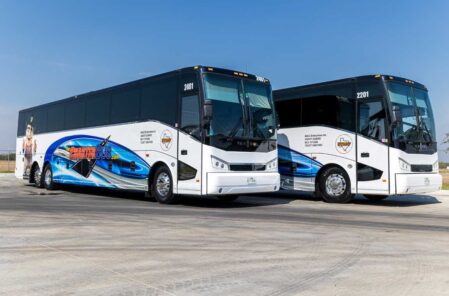
The Charter Bus runs its own modern coaches, backed by a regional network of partner operators, and our 24/7 line covers roadside support when a team is on the road overnight. Choosing a charter bus for colleges also means matching the vehicle to the trip. Our charter bus fleet includes a 40-passenger mini bus for smaller squads and staff and a 50–56 passenger coach for a full team and its gear.
Choosing University Charter Bus Services for the Long Term
A quote shows you a price. A season shows you how a vendor behaves, and campus transportation repeats itself: the same programs, the same routes and the same deadlines each year. Treat the first contract as the start of a working relationship, and test that relationship before you sign.
- Ask for references from institutions with similar trips, and call at least one.
- Ask who your point of contact will be and whether that person stays the same through the season.
- Ask how the vendor handles itinerary changes. A game moved by a day shouldn’t mean a new contract.
- Call the vendor’s after-hours number and see who picks up.
Planning a multi-day athletic trip? Our checklist for multi-day school sports trips covers the planning side. For campus trips that need hotels and event tickets on top of the bus, our sister company RGV Tours arranges complete group tours.
University Charter Bus Vendor Checklist
| Check | What to look for | Where to verify |
|---|---|---|
| Registration | USDOT number and active operating authority for interstate, for-hire trips | FMCSA bus safety search |
| Safety rating | Satisfactory, or written answers on drivers, maintenance and safety record if unrated | FMCSA bus safety search |
| Insurance | At least $5 million for 16+ seats, plus your university’s higher limits, for every operator on the trip | Certificate of insurance and your risk office |
| Drivers | CDL with passenger endorsement, medical certificate, drug and alcohol testing, phone policy | Vendor’s written answers |
| Hours | A trip plan within the 10-hour driving and 15-hour on-duty limits | Your itinerary review |
| Contract | Your terms on the confirmation, with no added vendor terms | Your procurement office |
| Quotes | More than one quote, compared line by line | Vendor quotes |
| Capacity | Fleet size, partner operators, backup plan, trip-day contact and accessible service | Vendor’s written answers |
Frequently Asked Questions

How much insurance should a charter bus company carry for a university trip?
At least the federal minimum: $5 million for vehicles seating 16 or more passengers, including the driver. Many universities require more. The University of Illinois System, for example, asks for $10 million on buses seating 25 or more, so confirm your own limits with your risk office.
How do I check a charter bus company’s safety rating?
Search the company by name or USDOT number using FMCSA’s Bus Safety Search. Review its operating status, safety rating and available safety records. A Satisfactory rating indicates adequate safety management controls. A Conditional rating calls for closer review. No rating means the carrier has not been evaluated against FMCSA’s safety fitness standards; it does not mean the company passed.
How many hours can a charter bus driver drive in a day?
Up to 10 hours of driving after 8 consecutive hours off duty, and no driving after 15 hours on duty. Longer trips need an overnight stop or a second driver.
Do subcontracted buses need to meet the same standards?
They should. Ask which company will operate each bus, then check that operator’s USDOT number, safety rating and insurance certificate. The University of Illinois System applies the same insurance requirements to subcontractors as to contractors.
Choosing a Reliable University Transportation Partner
A charter bus vendor earns a university contract by passing two tests. The federal records and the insurance certificate have to check out, and the people behind the quote have to answer the phone when a trip is underway. You can verify the first yourself and test the second before you sign.
To start a vendor review, contact The Charter Bus about college transportation services for your campus, or request a quote online. Send us your trip details and your university’s insurance requirements, and we’ll return a personalized quote.